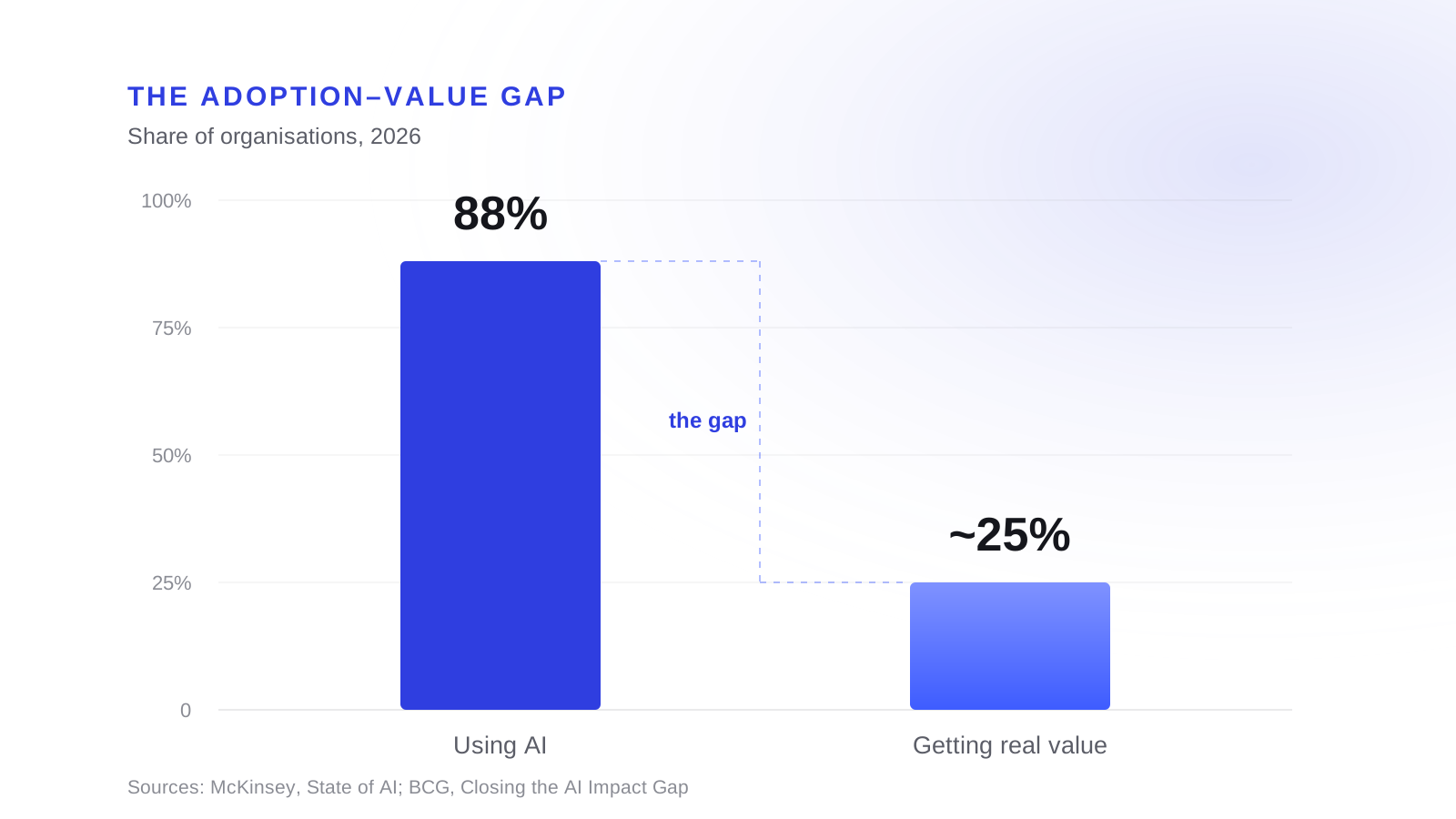
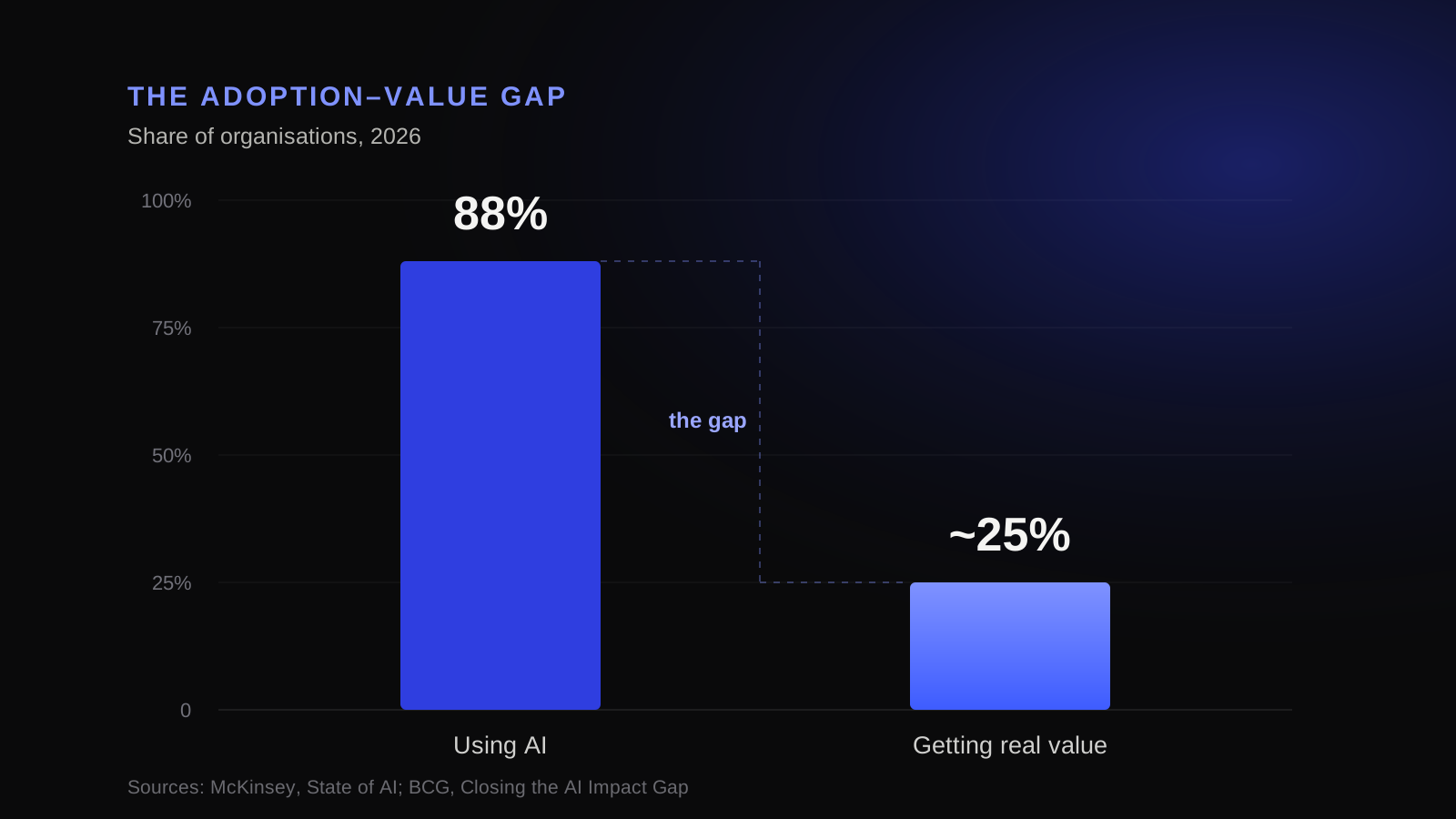
Almost every business you compete with is now using AI in some form. In McKinsey's 2026 survey, 88% of organisations reported using it in at least one function. Adoption is no longer the story — it's the baseline.
But adoption and advantage are two different things. When BCG studied more than 1,250 companies, only about one in four said they had created significant value from AI. The rest are busier, not better off.
The gap isn't the technology
The firms getting a return aren't the ones with the most tools. BCG found the leaders back fewer use cases — around 3.5 on average, against 6.1 for everyone else — and see roughly 2.1 times the ROI for that focus. They also spend their effort differently, following what BCG calls the 10-20-70 rule: 10% on algorithms, 20% on data and technology, and 70% on people, process, and the way work actually gets done.
The soft stuff — reimagining workflows, upskilling talent, and driving organizational change — turns out to be the hard stuff.
Put plainly: AI pays when you treat it as a change to how the work is done, not a subscription you switch on.
What the productivity actually looks like
The clearest evidence comes from a Stanford study of 5,179 customer-support agents. Giving them an AI assistant lifted issues resolved per hour by 14% on average — but the average hides the interesting part. The newest, lowest-skilled staff improved by 34%; the most experienced barely moved. The tool worked by spreading the instincts of the best agents to everyone else.
That is the part most owners miss. AI's first job isn't replacing your best people — it's pulling your newest people closer to them, faster than training ever has.
What "deep" adoption looks like
HSBC is a useful yardstick. It now runs more than 600 AI use cases; a single generative-AI assistant supports around 3 million client interactions a year, and over 20,000 of its developers use coding tools for a 15% efficiency gain. None of it is one clever app — it's AI wired into work that was already flowing. As its group chief information officer put it, "within the near future every employee will be using AI in their daily activities."
What it means for a smaller business
You don't have HSBC's budget, and you don't need it. The lesson scales down cleanly: take one or two jobs that eat real hours, redesign how they're done around AI rather than bolting it on, and measure what changes. That is the whole difference between the firms pulling ahead and the three-quarters who adopted AI and felt nothing move.
The businesses winning with AI aren't the ones who bought the most. They're the ones who were honest about which jobs to hand over — and then actually rebuilt them. If you want a straight answer on which of yours qualify, that's the conversation we have.
Sources. McKinsey, The State of AI (2026); BCG, Closing the AI Impact Gap (2025); Brynjolfsson, Li & Raymond, Generative AI at Work, Quarterly Journal of Economics (2025); HSBC, Transforming HSBC with AI.